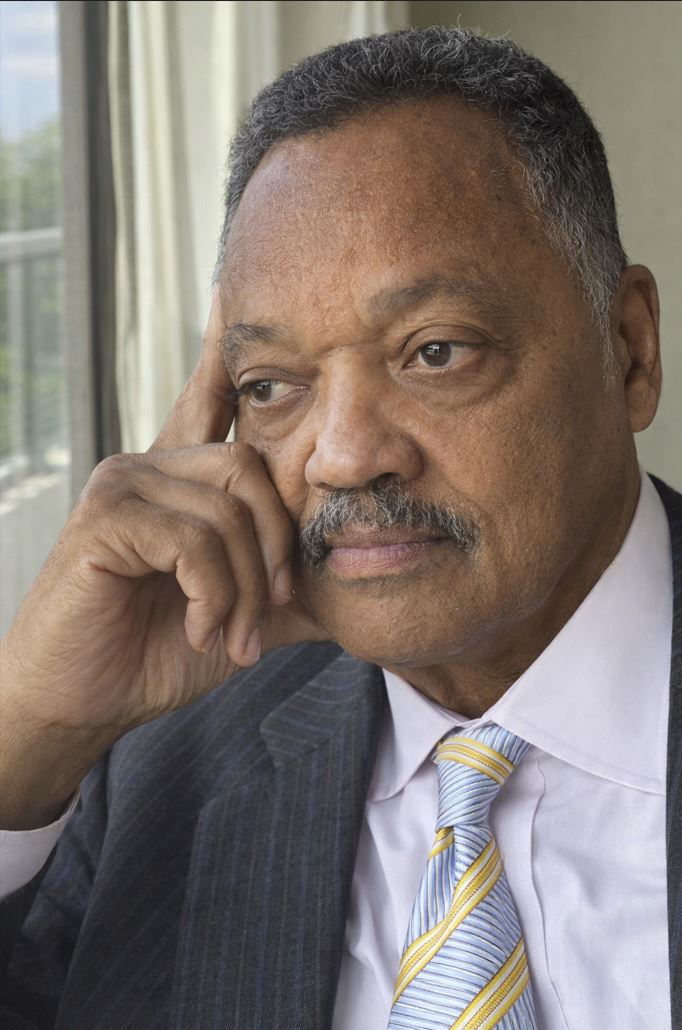
The passing of Jesse Jackson on February 17, 2026, at the age of 84, closes one of the most consequential chapters in the global struggle for civil rights and human dignity. For more than six decades, Jackson stood at the intersection of faith, politics, and activism. While the world remembers him as a protégé of Martin Luther King Jr., a two-time U.S. presidential candidate, and founder of the Rainbow/PUSH Coalition, Haiti remembers him as something more personal: a steadfast ally when the world often turned away.
In the story of modern Haiti — from dictatorship to fragile democracy, from refugee crises to political collapse — Jesse Jackson was present. He was not Haitian. He did not seek office there. Yet he believed deeply that the fate of the First Black Republic was inseparable from the broader global struggle for racial justice.
From Civil Rights to Global Rights
Born in 1941 in Greenville, South Carolina, Jackson rose from the segregated South to become one of the most visible civil rights leaders of his generation. His early activism — including sit-ins and organizing boycotts — was shaped by the belief that dignity must be demanded, not requested.
Through Operation Breadbasket and later Operation PUSH, he advanced economic justice campaigns that pressured corporations to hire Black workers and invest in underserved communities. But Jackson’s worldview expanded beyond American borders. He saw racism not merely as a domestic injustice, but as a global system intertwined with foreign policy, trade, and geopolitics.
Haiti became one of the clearest examples of that conviction.
Haiti: The First Black Republic and a Global Symbol
To Jackson, Haiti was never just another foreign policy issue. It was the birthplace of Black sovereignty — the nation that emerged from the only successful slave revolution in world history. He frequently reminded audiences that Haiti’s 1804 independence sent shockwaves through colonial powers and reshaped the Atlantic world.
Yet he also argued that Haiti had been punished for that revolution — through diplomatic isolation, crushing debt imposed by France, economic exploitation, and inconsistent U.S. policy. In his speeches, he often described Haiti as “unfinished business” in the struggle for global racial equality.
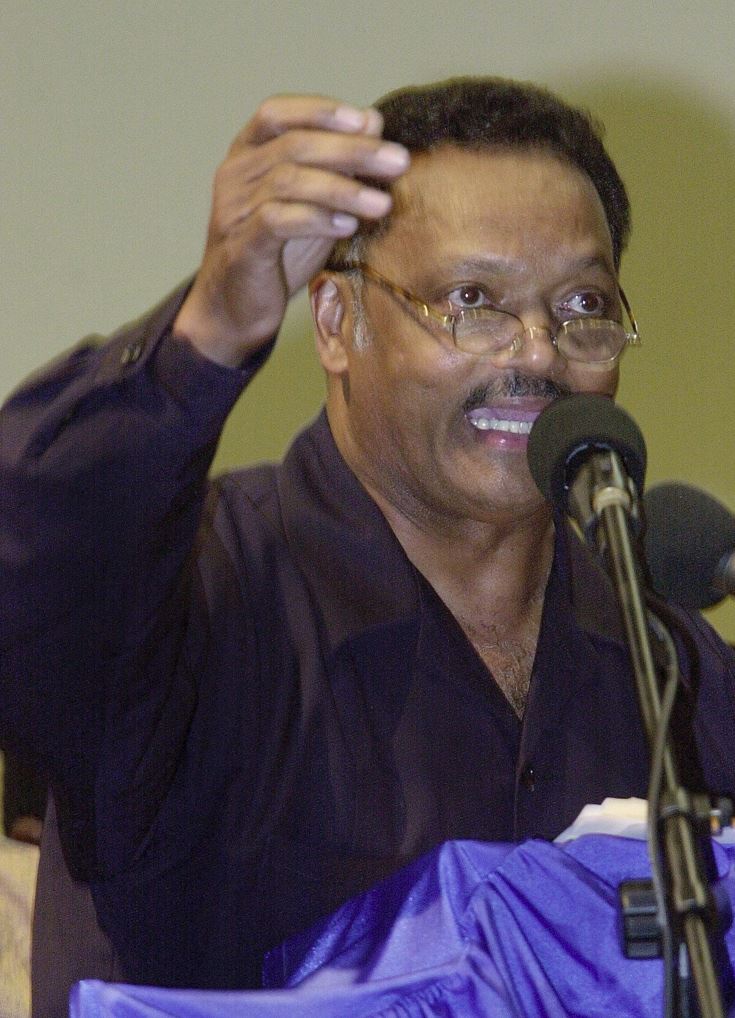
The 1991 Coup and the Refugee Crisis
Jackson’s involvement intensified after the 1991 military coup that overthrew Haiti’s first democratically elected president, Jean-Bertrand Aristide.
The coup unleashed violence and instability, forcing thousands of Haitians to flee by boat. Many were intercepted by the U.S. Coast Guard and detained at Guantánamo Bay. Among them were refugees who tested positive for HIV — held in legal limbo, unable to enter the United States and unable to safely return home.
Jackson became one of the most vocal critics of this policy.
In 1993, he traveled to Guantánamo Bay and publicly condemned what he described as inhumane detention conditions. He used his moral authority and media presence to spotlight the plight of the refugees, particularly those isolated because of their HIV status. His advocacy helped shift public debate and contributed to policy changes that allowed many detainees to enter the United States on humanitarian grounds.
For Haitian families watching from Port-au-Prince and Miami, Jackson was one of the few national figures willing to confront both Republican and Democratic administrations on their handling of Haitian asylum seekers.
Democracy and Aristide’s Return
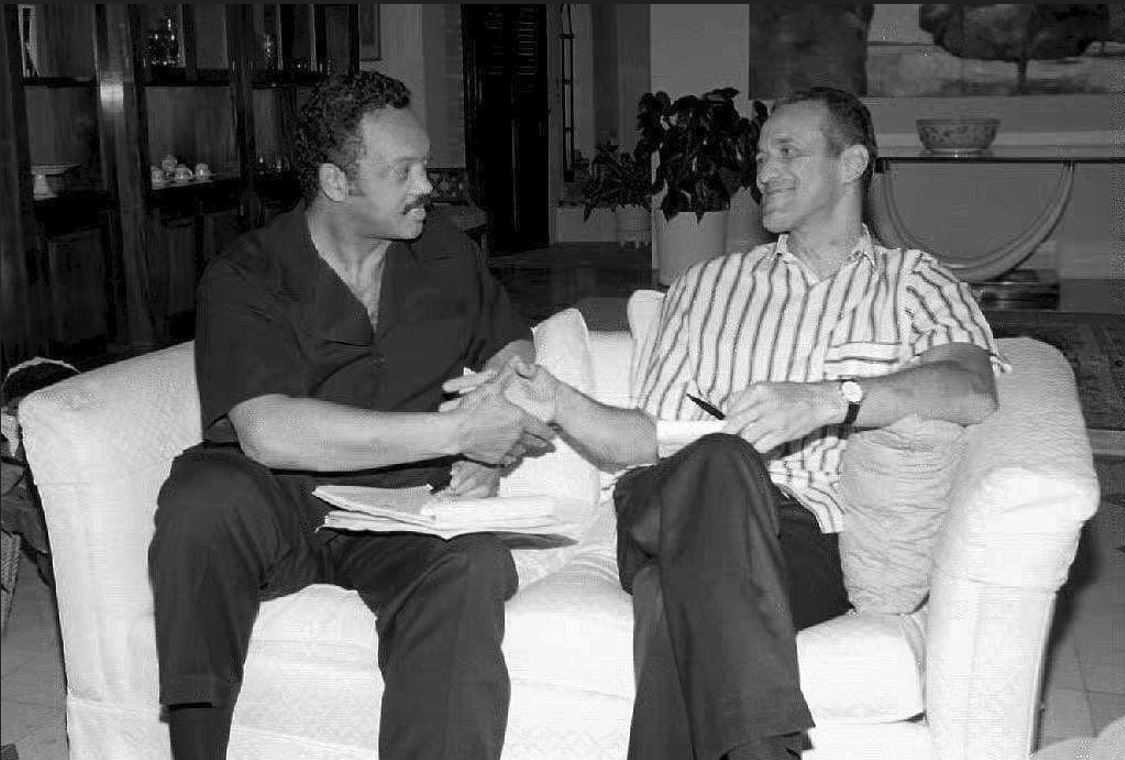
Jackson was also a strong advocate for the restoration of President Aristide. He viewed the 1994 U.S.-led intervention — Operation Uphold Democracy — as a necessary step to restore the will of Haitian voters. To him, democracy was not negotiable.
When Aristide was again removed from office in 2004, Jackson described the event as deeply troubling and met Aristide during his exile in South Africa. While U.S. officials framed the episode as a constitutional transition, Jackson maintained that Haitian sovereignty must be respected and that external powers should not decide the political destiny of the Haitian people.
His position was consistent: democracy must be people-driven, not geopolitically engineered.
After the Earthquake: Beyond Emergency Aid
Following the catastrophic 2010 earthquake that killed hundreds of thousands and devastated Port-au-Prince, Jackson shifted his advocacy toward long-term reconstruction and structural reform.
He argued that Haiti’s recurring crises were not simply the result of natural disasters, but the product of historic economic constraints and international neglect. He called for debt relief, investment in infrastructure, and what he described as a “Marshall Plan–level commitment” to Haitian development.
In interviews and public forums, he emphasized that charity was insufficient. Haiti needed partnership, economic inclusion, and respect for its sovereignty.
The Montana Accord and Haitian-Led Solutions
Even in his later years — despite declining health due to progressive supranuclear palsy — Jackson remained engaged in Haiti’s governance crisis.
He supported discussions around the Montana Accord, a Haitian civil society initiative proposing a transitional government framework led by Haitians rather than externally imposed actors. Hosting forums at the Rainbow/PUSH headquarters in Chicago, he listened to Haitian civic leaders, scholars, and activists advocating for institutional reform.
His final public statements on Haiti were clear: democracy is more than elections. It requires freedom of expression, accountable governance, and inclusive participation.
A Citizen Diplomat for the World
Jackson’s international activism extended beyond Haiti. Over decades, he negotiated the release of American prisoners in Syria, Cuba, Iraq, and Serbia, often acting as an unofficial “citizen diplomat.” His approach — blending moral appeal with strategic engagement — sometimes irritated U.S. administrations, but frequently produced results.
Yet Haiti remained distinct in his advocacy. Unlike short-term diplomatic missions, his engagement with Haiti spanned more than thirty years. It was not episodic; it was relational.
The Rainbow Coalition and Global Solidarity
Jackson’s Rainbow Coalition philosophy — uniting racial minorities, immigrants, workers, LGBTQ communities, and the poor — naturally extended to Haitians in the diaspora.
In cities like Miami, New York, Boston, and Chicago, Haitian Americans saw in Jackson a leader who recognized their struggles as part of a broader movement for justice. He consistently linked immigration policy, refugee treatment, and foreign policy to domestic civil rights.
His two presidential campaigns in 1984 and 1988 further elevated global issues into American political discourse. He demonstrated that foreign policy could be framed through the lens of human rights, not merely strategic interests.
Criticism and Complexity
Jackson’s legacy, like Haiti’s own political journey, is complex. Critics sometimes accused him of overreach, of grandstanding, or of being too closely aligned with certain leaders. Others questioned his political strategy.
But even critics acknowledged that he expanded the boundaries of what American civil rights leadership could look like. He internationalized the movement. He insisted that Black liberation in the United States was tied to dignity in Africa, the Caribbean, and beyond.
What He Represented to the World — and to Haiti
To the world, Jesse Jackson represented moral persistence. He believed that faith without action was hollow, and that political power must be accountable to the most vulnerable.
To Haiti, he represented something rare: consistency.
He showed up during refugee crises.
He spoke out during political upheaval.
He called for structural economic reform after disaster.
He defended Haitian sovereignty even when it was unpopular to do so.
In a century marked by shifting alliances and fleeting attention spans, Jackson’s decades-long advocacy for Haiti stands out.
A Legacy That Continues
As tributes pour in following his passing, many remember the slogan he popularized: “I Am Somebody.” For Haitians navigating cycles of instability and resilience, that message resonated deeply.
Jesse Jackson believed Haiti was somebody — not a failed state, not a perpetual crisis, but a nation born of revolutionary courage whose dignity must be honored.
His life reminds the world that solidarity is not symbolic; it is sustained. And in the unfinished work of Haitian democracy, his voice — though now silent — remains part of the chorus calling for justice.
Comments (0)
Add a Comment
No comments yet