
Editor’s note: This story is part of our This Day in History series, where The Haitian Times revisits pivotal moments that shaped Haiti and its Diaspora.
Haitian Ancestors’ Day, known in French as Jour des Aïeux and in Creole as Jou Zansèt, is a national holiday observed on Jan. 2. The day honors Haiti’s forefathers and all those who died fighting for the country’s freedom, particularly during the Haitian Revolution that led to independence in 1804.
The holiday serves as a more reflective extension of Jan. 1, Haiti’s Independence Day. While Jan. 1 celebrates the declaration of independence, Jan. 2 focuses on remembrance, gratitude and national identity, both in Haiti and across Haitian communities abroad.
Ancestors’ Day is an official public holiday in Haiti, listed among the country’s legal fêtes as Ancestry Day, Jour des Aïeux. The date is closely tied to the independence cycle. Jan. 1 marks the birth of the nation, while Jan. 2 explicitly honors those who sacrificed their lives in the struggle against slavery and French colonial rule.
The commemoration connects directly to the revolutionary decade that began with the August 1791 uprising and culminated in the proclamation of Haiti as a free Black republic. Its core purpose is to remember the founders, soldiers and countless unnamed ancestors who died fighting for emancipation and self-determination. The immense loss of life during the Revolution—estimated by some at more than 200,000 Haitians—is transformed into a source of collective dignity.
Symbolically, the day reinforces Haiti’s identity as the first independent Black-led nation and the first Caribbean country to abolish slavery. It carries deep meanings of resistance, Black freedom and anti-colonial pride.
In Haiti, Jan. 1 and Jan. 2 function as a two-day season of remembrance. Independence Day festivities often flow into Ancestors’ Day observances, marked by continued patriotic events, recovery from New Year’s Eve and family gatherings.
Public life during the holiday may include state or local ceremonies, speeches and patriotic programs recalling the history of independence and honoring national heroes. Parades and marches also take place, particularly in major cities such as Port-au-Prince, as part of the broader independence commemoration.
At the household and community level, families traditionally gather for large meals featuring Haitian dishes such as rice and beans, fried meats, pikliz and salads. As part of the Jan. 1–2 celebrations, people often describe the feast as vant deboutonnen—an expression meaning “unbuttoned bellies,” or eating freely and abundantly.
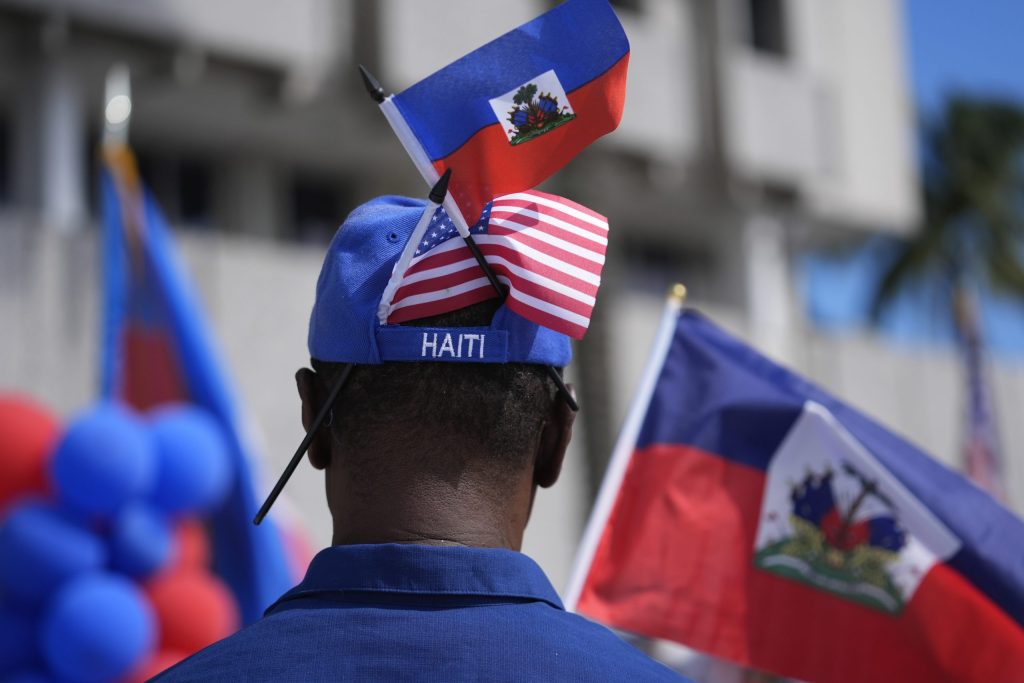
Patriotic symbols, including the Haitian flag, images of revolutionary leaders and national colors worn or displayed at gatherings, serve as visual reminders of those honored on Ancestors’ Day.
Haitian communities in the United States, particularly in cities with large Haitian populations such as Miami, North Miami, New York, Boston and Philadelphia, also observe the holiday as part of a wider calendar of Haitian historical commemorations.
Diaspora observances often include community events, cultural programs and educational talks explaining the significance of Jan. 1 and Jan. 2. Gatherings frequently feature Haitian food, including Soup Joumou, along with music and art aimed at reconnecting younger generations with revolutionary history and ancestral pride.
Social media has become another important space for commemoration. Haitian American organizations, media outlets and influencers regularly mark Jan. 2 by highlighting Ancestors’ Day and emphasizing its role as a moment of reflection on national history, cultural heritage and sacrifice.
Together, Independence Day and Ancestors’ Day form a yearly ritual of memory for Haitians everywhere. Through food, ceremony, family gatherings and public culture, the holiday encourages Haitians at home and in the Diaspora to see themselves as part of a long line of fighters for freedom—and to face present-day challenges with a sense of rootedness and hope.
The post Today in history: Jan. 2 marks Ancestors’ Day for Haitians worldwide appeared first on The Haitian Times.
Via Haitian Times
Read original article
Comments (0)
Add a Comment
No comments yet