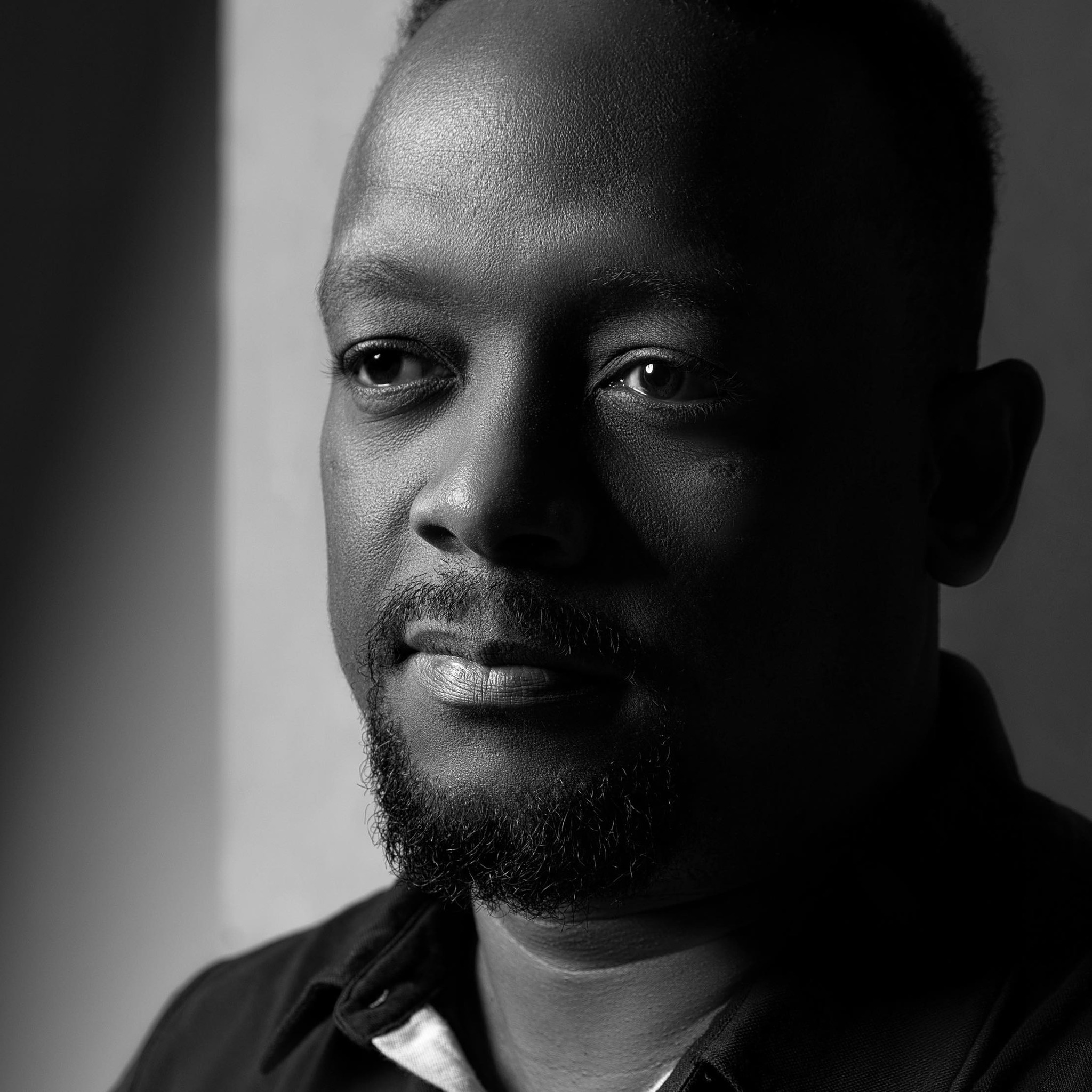
This is not just the story of one prominent journalist caught in a legal storm. It is the story of what happens when a nation collapses so completely that even its most influential professionals are forced to live fragile lives in exile. Regardless of how the legal process unfolds, the fact that a journalist of Pedre’s stature was navigating survival in a foreign country is itself an indictment of Haiti’s political, security, and institutional failure.
Had Haiti remained a functional state, Pedre would likely still be working safely in Port-au-Prince or Port-de-Paix—building media, mentoring young journalists, and serving his community—rather than facing detention in the U.S. criminal and immigration systems.
From Provincial Radio to National Voice
Born on July 8, 1980, in Port-de-Paix, Carel Pedre grew up in a Haiti where radio was more than entertainment—it was the backbone of civic life. As a child, he obsessively called into radio shows, unknowingly training himself in public discourse long before journalism became his profession.
He entered the media world in 1996 through regional radio, then moved to Port-au-Prince in the late 1990s—a necessary step for national relevance in Haiti’s centralized media ecosystem. There, he worked at major stations including Radio Planet Kreyol and Radio ONE, eventually becoming a household name through the wildly popular morning show Chokarella.
At a time when Haitian families often pushed their children toward “safe” careers like law or medicine, Pedre chose journalism—one of the most dangerous professions in the country. It was a risky path, but an essential one in a society starved for accountability.
Career Highlights at a Glance
Period Milestone Significance
1996 Provincial radio debut Entry into Haitian media in Port-de-Paix
Late 1990s Move to Port-au-Prince Work at Radio Planet Kreyol & Radio ONE
2007–Present Host, Digicel Stars Haiti’s premier TV talent competition
2010 Launch of Chokarella Multi-platform digital media brand
2010 “Eye of Haiti” recognition Global reporting during the earthquake
2010 Sunday Project founded Grassroots food program in Cité Soleil
2021–2025 Global cultural ambassador Talks at Harvard, TED, and abroad
2010: The Earthquake That Changed Everything
January 12, 2010, marked a turning point—not just for Haiti, but for Pedre’s career. When the earthquake destroyed the country’s communication infrastructure, he used social media, webcams, and unstable internet connections to relay real-time updates to the world.
International media dubbed him “The Eye of Haiti”—a rare voice connecting a devastated nation to the global community. That moment transformed him from radio host to digital pioneer.
He soon expanded Chokarella into apps and platforms like PleziKanaval, preserving Haitian culture, music, and Carnival for the diaspora. In effect, Pedre became a one-man media ecosystem, reaching more than a million people worldwide.
Journalism Was Never Enough: The Humanitarian Role
In Haiti, professionals are often forced to replace the state. Pedre was no exception.
After the earthquake, he launched the Sunday Project, distributing food to children in Cité Soleil. He later served on boards supporting education and cancer care and played a central role in fundraising during the COVID-19 crisis.
Between 2020 and 2021, he helped raise over $330,000 for hospitals like Bernard Mevs and Fermathe—facilities that would otherwise have shut their doors. This was not charity for publicity; it was survival work in a country with no reliable safety net.
Haiti After 2021: A State in Free Fall
The assassination of President Jovenel Moïse in July 2021 accelerated Haiti’s collapse. By 2025, criminal coalitions controlled 85–90% of Port-au-Prince, replacing the state with gang rule.
This was not random violence—it was organized criminal governance. Ports were blocked, businesses looted, hospitals ransacked, and entire neighborhoods emptied.
For journalists, visibility became a death sentence.
Haiti by the Numbers (2024–2025)
Indicator Reality
Gang control of capital 85–90%
Internally displaced persons 1.3 million
Murders in 2024 5,601
Public workforce loss 7.8%
Hospital closures Multiple nationwide
The middle class collapsed. Professionals fled or went into hiding. Haiti’s “brain drain” became an evacuation.
Exile Is Not Freedom: The Diaspora Trap
Forced migration does not end instability—it relocates it.
Thousands of skilled Haitians fled to the U.S., Canada, and the Caribbean, often under precarious immigration statuses. In exile, reputations, community networks, and cultural protections disappear.
For a public figure like Pedre—whose work depended on openness, trust, and visibility—this vulnerability was magnified. Survival replaced stability.
The Tamarac Arrest: Facts Without Judgment
On December 21, 2025, Broward County deputies responded to a call alleging a domestic dispute in Tamarac, Florida. Conflicting accounts emerged. Witness testimony varied. The alleged victim denied being choked but later stated she was thrown down.
Pedre was arrested under Florida’s domestic battery statute. A judge set a $1,000 bond—but an ICE immigration hold immediately overrode it, placing him in no-bond federal custody.
An arrest is not a conviction. The facts remain contested, and due process must run its course.
Why the ICE Hold Changes Everything
An ICE detainer means Pedre could be held regardless of the local charge’s outcome. Even if the case is dismissed, his immigration status may still be reviewed for possible removal.
This is the harsh reality facing Haitian professionals in 2025: one legal incident—proven or not—can trigger detention, deportation, and permanent separation from family and career.
The Bigger Storm: TPS Ending in 2026
Adding to the crisis, U.S. authorities announced the termination of Temporary Protected Status (TPS) for Haitians effective February 3, 2026.
This decision affects an estimated 550,000 workers, despite Haiti’s ongoing collapse.
TPS holders contribute $36 billion annually to the U.S. economy, including $10.7 billion in Florida alone—yet they now face mass uncertainty.
A Presumption of Innocence in the Age of Viral Judgment
In today’s digital culture, arrest records travel faster than facts. Pedre’s image circulated widely before any legal resolution.
Yet inconsistencies in witness statements and the absence of conclusive evidence demand restraint. The presumption of innocence is not sympathy—it is the foundation of justice.
The Real Wake-Up Call
This moment is not about defending alleged actions. It is about confronting an unbearable truth:
Haiti has failed so completely that its most capable citizens now live on the edge—caught between gang rule at home and legal precarity abroad.
If Haiti were governed by institutions instead of criminal networks, Carel Pedre would not be in ICE custody today. He would be home.
Final Reflection: A Nation That Eats Its Future
Carel Pedre’s career symbolizes what Haiti could be—and what it is losing. Nearly three decades of media leadership, humanitarian service, and cultural preservation now stand overshadowed by exile and uncertainty.
His story mirrors that of millions of Haitians living between two worlds: forced to leave a country they love, only to struggle for dignity elsewhere.
Until corruption and gang rule are dismantled, Haiti’s brightest minds will continue to disappear—not because they failed their country, but because their country failed them.
Justice—for Pedre and for Haiti—depends on restoring a homeland where professionals can live, work, and serve without fear. Until then, displacement will remain the nation’s most devastating export.
Comments (1)
Add a Comment
Jean Louis
December 24, 2025Pitit Ayiti yo pase trop mize nan pays etranje. Fok sa chanje