
Not long ago, I was hired to interpret for a young Haitian woman who had recently arrived in the United States. She was meeting with an attorney on Zoom to determine whether she qualified for free legal representation in an immigration case. When I greeted her in Haitian Creole, she did not respond. I greeted her again, a little more clearly. She looked away. Then I asked in English whether she spoke Haitian Creole. She replied that she spoke English and French. That was when I understood: it was not that she had failed to understand me. She was ashamed.
She said she could do the interview in English, so I did not insist. I simply told her I would stay on the call in case she needed me and went on mute. The interview continued in English. A few minutes later, she got stuck on a question. She turned to me for help. I helped her quietly, and she went on.
I have thought about that moment many times since. Not because it was unusual, but because it was not. Moments like that happen far too often. And they keep bringing me back to the same question: what would it take to heal a wound this old?
So let me ask the question at the heart of this column:
Is Haitian Creole really an inferior language?
I am not asking that to provoke anyone. I am asking because we cannot heal what we refuse to name. Before we can begin tending to this wound, we have to understand how it formed, how it was passed down, and why so many Haitians still carry it.
There are many ways a person can be taught to turn away from their own language.
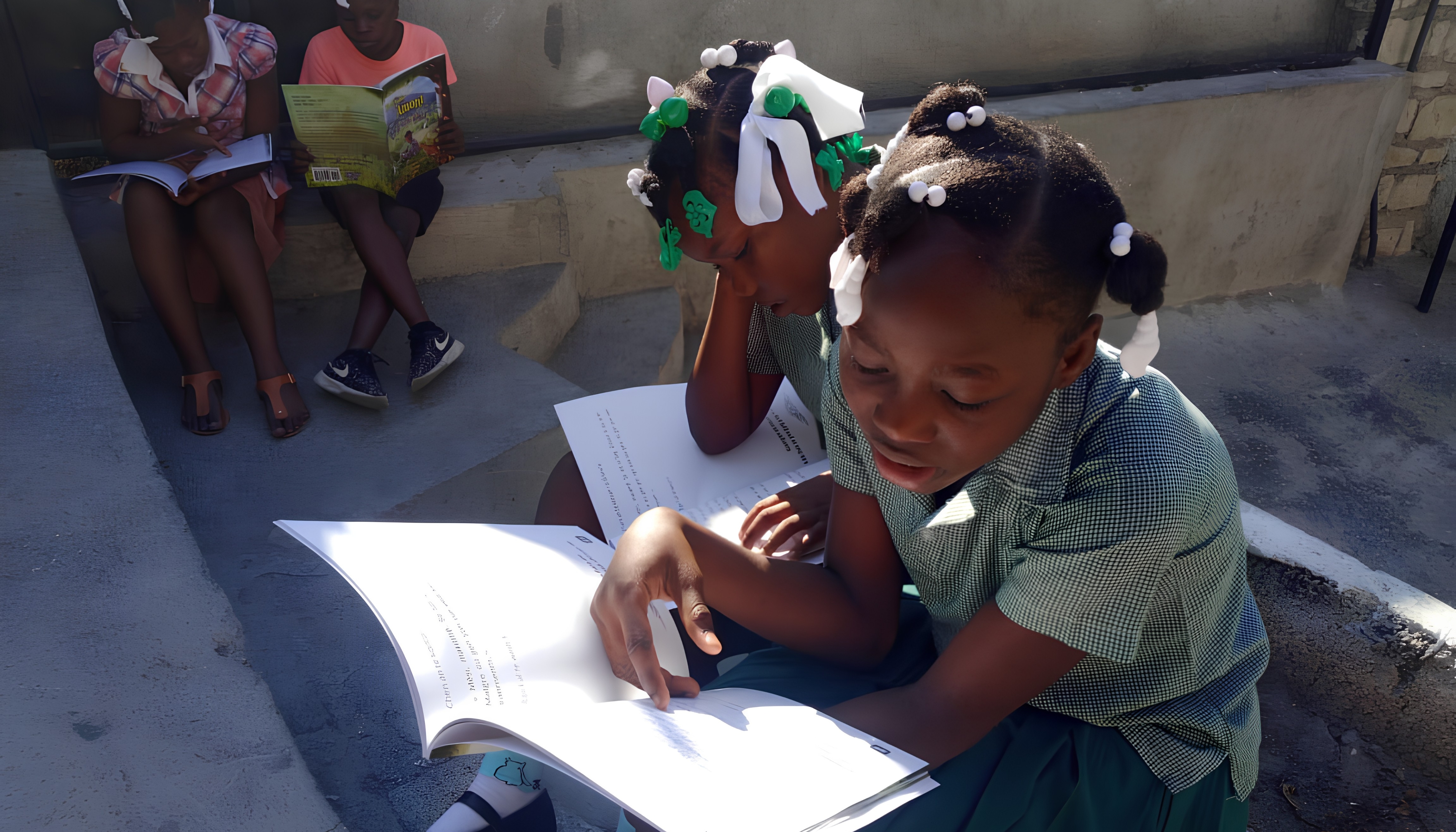
There is the child raised in Port-au-Prince, where French was the language of school, newspapers, and church, while Haitian Creole was left to the market, the yard, and reprimand.
There is the child in a rural classroom handed a token for speaking Haitian Creole and made to carry shame for the rest of the day.
There is the young woman whose family worked tirelessly so she could speak French, believing it would open doors that Haitian Creole never could.
There is the child in the diaspora mocked not simply for speaking Haitian Creole, but for the accent Haitian Creole left behind in their English.
There is the professional who learned, without anyone saying it outright, that in certain spaces, sounding French is often mistaken for competence.
None of these people woke up one morning and chose shame. They learned it. And often, they learned it from people who loved them and believed they were protecting them.
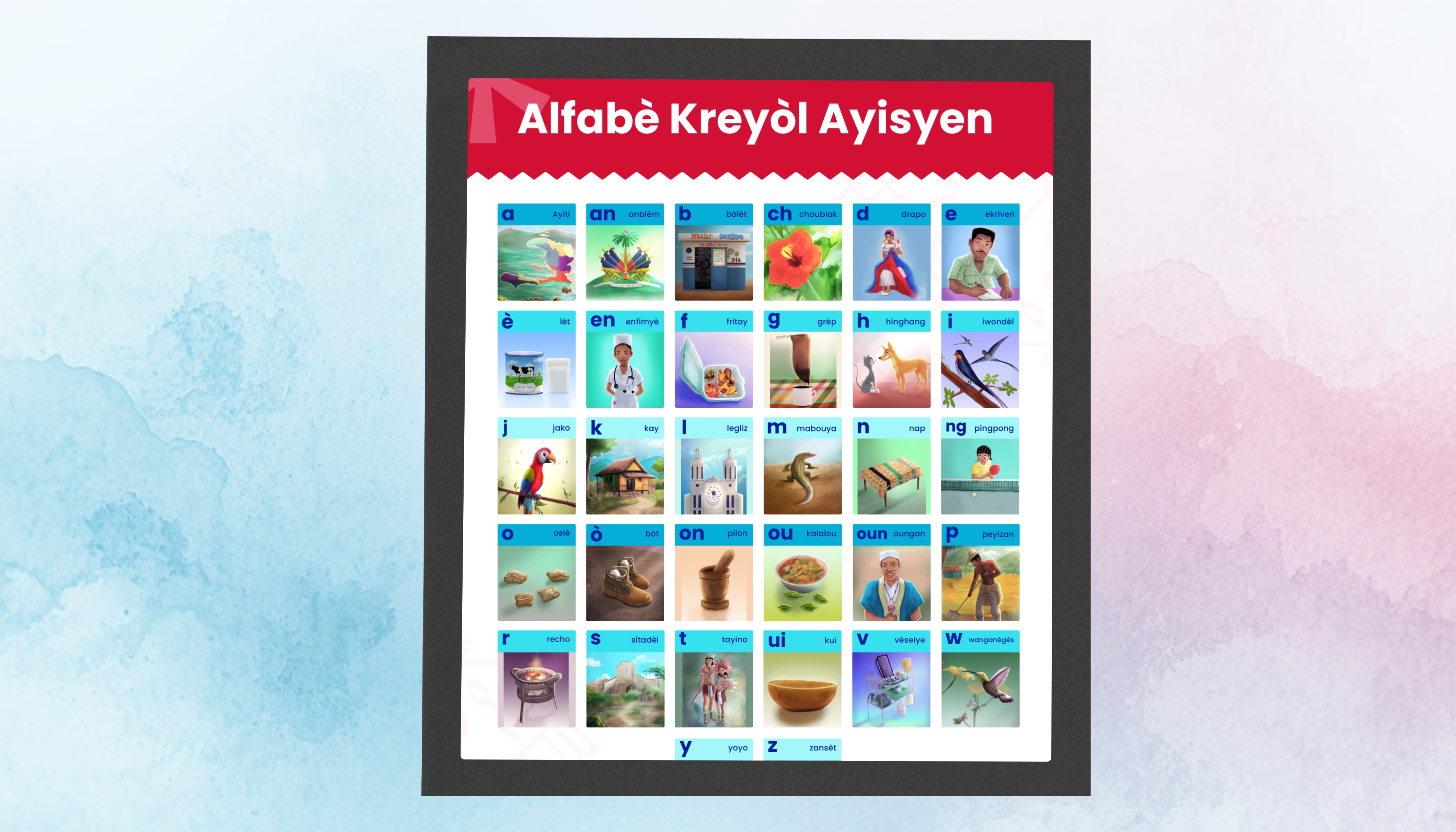
So is Haitian Creole inferior? No. And I do not say that out of pride alone. Linguists are clear: no language is inherently inferior to another. Every language is capable of carrying thought, memory, knowledge, beauty, and complexity. Haitian Creole is no exception. It has its own grammar, its own literature, its own poetry, and its own intellectual traditions.
But facts alone do not heal. Facts do not always reach the places where shame lives.
The harder truth is that, for most of our history, Haitian Creole was treated as inferior by the very institutions that shaped Haitian life. For generations, schoolchildren were handed the token, a small object passed from student to student as punishment for speaking Haitian Creole in class. Whoever held it at the end of the day could be beaten or humiliated in front of the school. This is not folklore. This is how children were educated in Haitian schools. And what is even more painful is that some schools still operate by this logic today.
Haitian Creole was not allowed into the classroom as a language of instruction until the Bernard Reform of 1979. It was recognized as an official language of Haiti only with the 1987 Constitution. Even now, it remains pushed to the margins in medicine, law, higher education, and formal publishing. When a language is excluded from the spaces where authority is exercised, it should not surprise us that people begin to believe it does not belong there.
And when Haitians left the country, many carried those same patterns of domination with them into churches, schools, homes, and workplaces abroad. The wound did not stay in Haiti. It crossed borders with us.
So the question is not only whether Haitian Creole is considered inferior. The deeper questions are these:
Inferior to what? According to whom? And in service of whose interests?
And perhaps the hardest question of all is this: what is it costing us, as individuals and as a people, to keep believing that lie?
I do not believe that the young woman was wrong to feel what she felt. I believe she was carrying something older than she was. Something none of us chose, but many of us are still learning, in our own way and in our own time, how to lay down.
Lang Nou, Fòs Nou, Idantite Nou is a healing project. Each month, this column will take up one dimension of our relationship to Haitian Creole and examine it honestly: shame, identity, culture, education, history, technology, economics, mental health, etc... The goal is not to argue anyone out of what they feel. Shame does not disappear because someone wins an argument. Healing asks for truth, time, and practice.
This column is a place to do that work together, and to show what Haitian Creole can do when we finally stop confining it and let it take its rise.
Next month: what a child loses when we do not teach them to speak Haitian Creole.
-----
Marleen Julien Souverain writes, translates, and advocates for the Haitian language. She is the founder of Creole Solutions and author of Nan Jaden Amoni.
Comments (0)
Add a Comment
No comments yet