
In the heart of Boston’s West End, where history meets modern innovation, a new kind of hospitality experience is quietly transforming how people travel, connect, and experience the city.
At the center of this transformation is Meco Hotel, a bold and forward-thinking concept that blends affordability, design, and community into one seamless experience. But behind this groundbreaking venture is an even more powerful story — one of resilience, faith, and an unwavering commitment to building something that had never been done before.
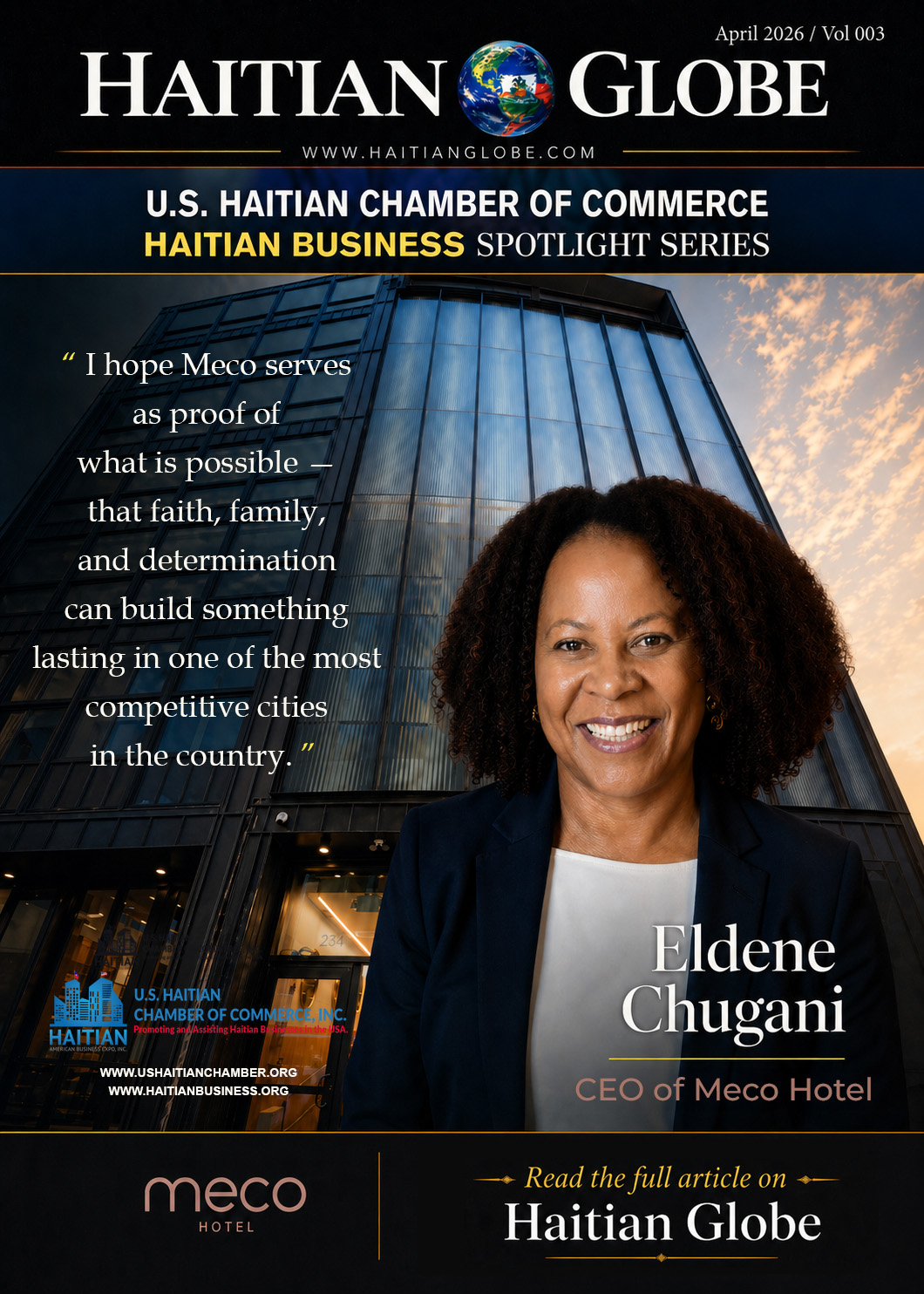
Founded by Eldene Chugani, a Haitian entrepreneur raised in Boston, Meco Hotel is not just a business — it is a milestone. As one of the very few Black women, and notably a Haitian woman, to build and own a hotel in Boston, Eldene is breaking barriers in one of the most capital-intensive and historically exclusive industries in the country.
What makes this story even more remarkable is the journey behind it. What began as an idea inspired by global travel evolved into an eight-year process marked by regulatory challenges, legal hurdles, financial risks, and a global pandemic — all navigated through faith, family, and relentless determination.
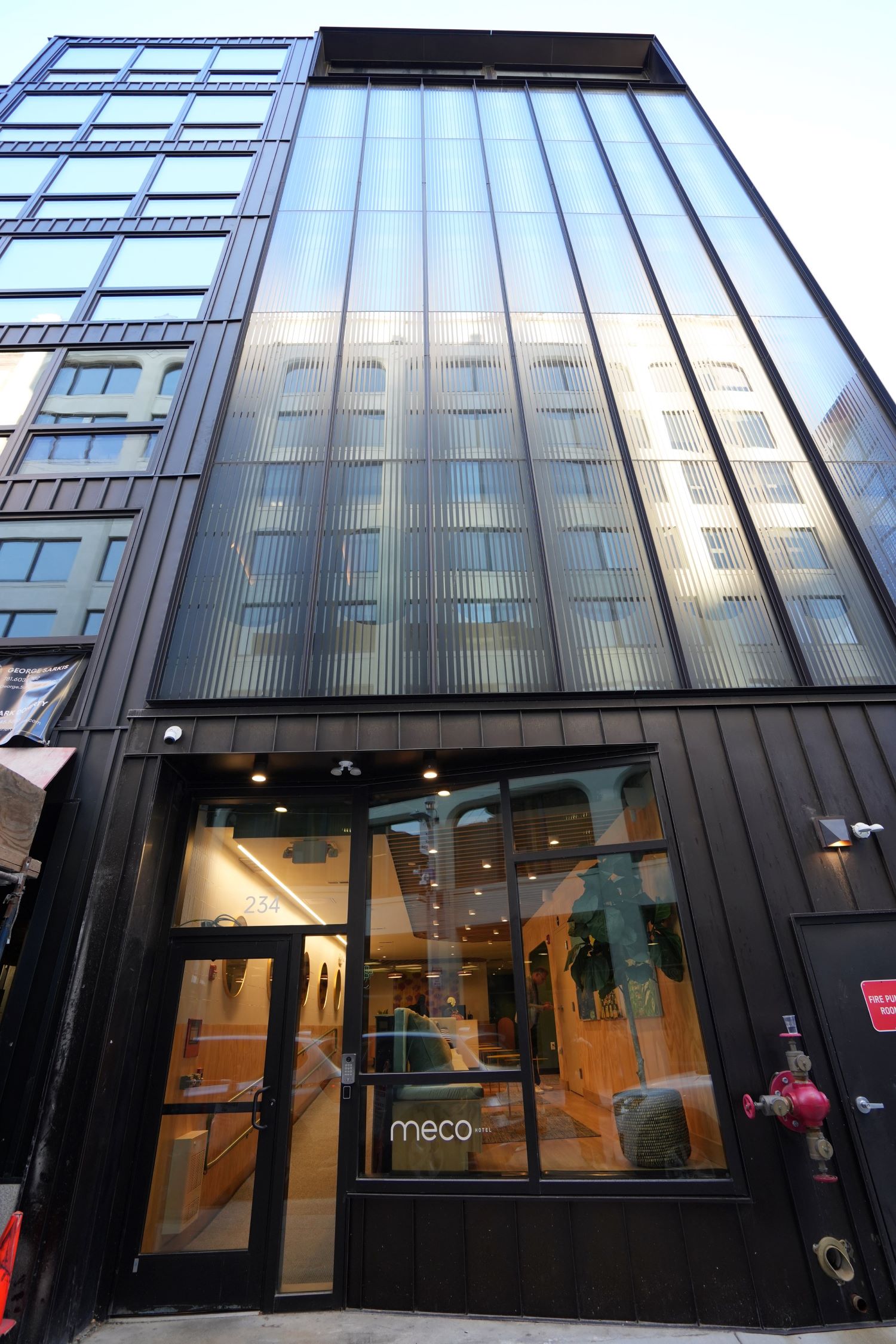
Today, Meco Hotel stands as more than a place to stay. It is a symbol of possibility.
As part of the Haitian Globe Business Spotlight Series in partnership with the U.S. Haitian Chamber of Commerce, we sat down with Eldene Chugani to explore her journey, the vision behind Meco, and the legacy she hopes to leave.
Interview Haitian Globe:
You mentioned it took eight years to launch Meco Hotel. What first inspired the idea, and what kept you going during those years of development?
Eldene Chugani:
Before meeting my husband Gunish, I spent time backpacking across Europe, where I became familiar with hostels and social travel. Later, while living in Asia, I was introduced to the pod hotel concept, which is widely embraced there.
When we moved to the United States, we were surprised that this model didn’t exist here. That realization became the seed for what would become Meco Hotel.
What kept us going was our faith, our passion, and our partnership as a family. Every challenge brought us back to our purpose. We believed deeply in the need for affordable hospitality in major cities, and that belief sustained us through every obstacle.



Haitian Globe:
You are among the very few Black women and Haitians to build and own a hotel in Boston. What does that milestone mean to you?
Eldene Chugani:
This journey required significant sacrifice, including leaving my career to pursue it. Reaching this milestone is deeply meaningful to me, my family, and our community.
I grew up in a single-parent household and attended Boston Public Schools. I worked three jobs throughout my education to build a future for myself.
My hope is that this accomplishment shows young people that their dreams are possible — but also that it takes discipline, focus, and long-term commitment. Entrepreneurship is not a sprint. It is a marathon.
Haitian Globe:
Meco is described as a new kind of hospitality experience. What gap were you aiming to fill?
Eldene Chugani:
We saw a gap between budget hotels and premium properties. Travelers often had to choose between affordability and quality.
We wanted to create something in between — a space that offers the privacy and cleanliness of a hotel, combined with the affordability and social experience of a hostel.
Meco is not just a place to sleep. It’s a place where people connect — with each other and with the city.



Haitian Globe:
You faced major challenges — zoning issues, lawsuits, and even pandemic disruptions. What tested you the most?
Eldene Chugani:
Honestly, every stage was a test — emotionally, financially, and mentally.
We faced zoning challenges because there was no precedent for what we were building. There were legal battles, construction complexities, and pandemic-related disruptions.
But through all of it, we kept returning to our “why.” Our faith, our family, and our belief in the project carried us forward.
Haitian Globe:
How does Meco Hotel contribute to Boston’s tourism and local economy?
Eldene Chugani:
We provide an affordable, high-quality option in the heart of the city, making Boston more accessible to a wider range of travelers.
Every guest we host contributes to the local economy — restaurants, shops, and cultural institutions.
We’re also proud to reflect the diversity of Boston as a locally owned business. Representation matters, especially in industries where it has been limited.


Haitian Globe:
Meco has received strong guest reviews and awards. What sets your guest experience apart?
Eldene Chugani:
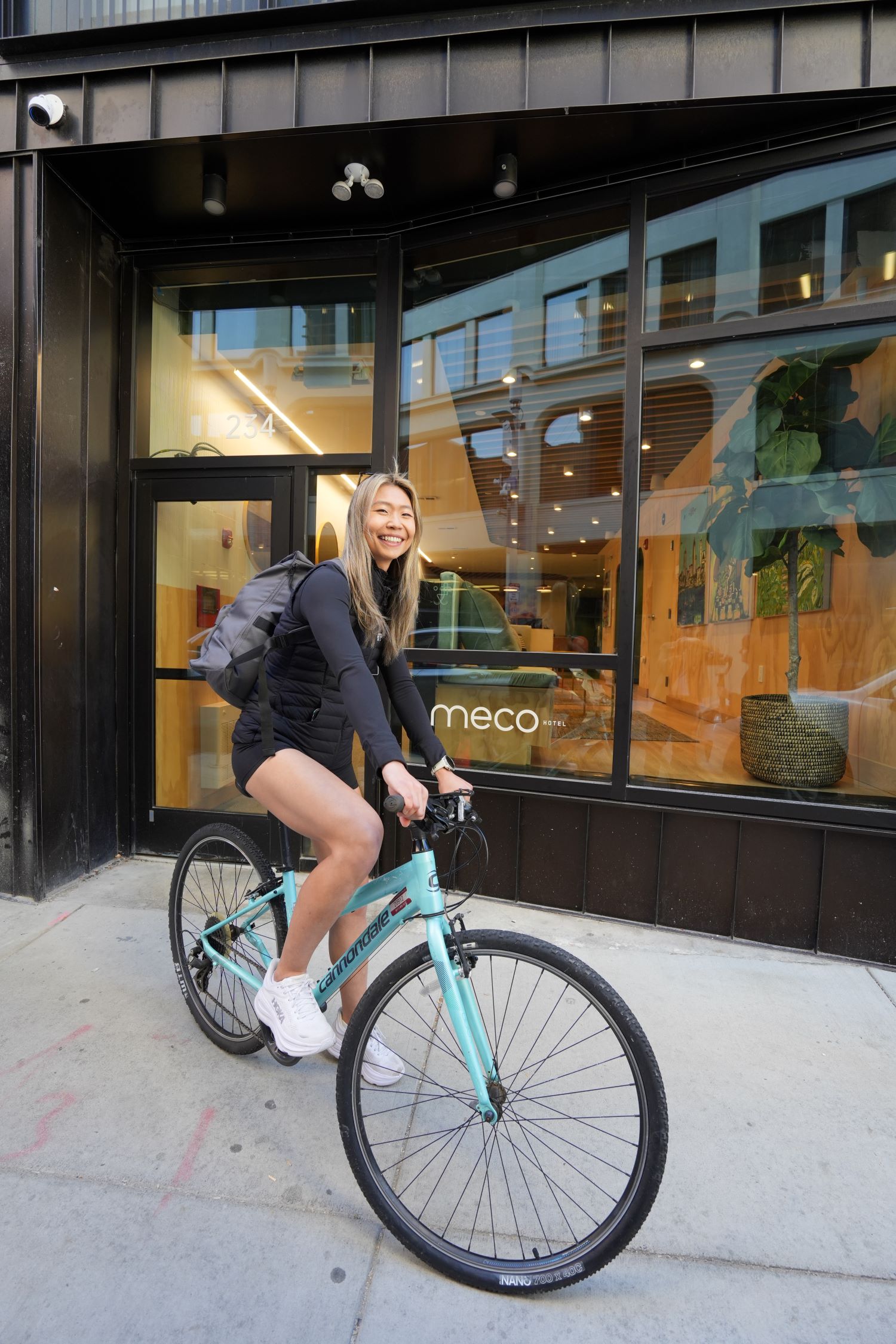
We are deeply committed to the guest experience. From booking to checkout, every detail is intentional.
Guests often speak about the warmth of our team and the sense of community they feel during their stay.
We didn’t build Meco to be just another hotel — we built it to be an experience.
Haitian Globe:
What advice would you give to young Haitian and minority entrepreneurs?
Eldene Chugani:
Start with a clear vision and understand what it will take to bring it to life.
Save early. Build financial discipline. Learn the capital landscape — grants, loans, partnerships.
And most importantly, protect your resilience. The journey will be long, and there will be moments when quitting feels easier. In those moments, return to your purpose.



Haitian Globe:
What legacy do you hope Meco Hotel will leave?
Eldene Chugani:
I hope Meco serves as proof of what is possible.
Proof that someone raised in Boston Public Schools, by a single mother, can build something lasting in one of the most competitive cities in the country.
And I hope it opens doors for others who have been told certain industries are not for them.
Final Thoughts:
Meco Hotel is more than an innovation in hospitality — it is a statement.
A statement that representation matters.
That resilience matters.
And that bold ideas, even in the face of uncertainty, can reshape entire industries.
Through her journey, Eldene Chugani is not just building a hotel — she is building a legacy that will inspire the next generation of Haitian and minority entrepreneurs to think bigger, aim higher, and never underestimate what is possible.
Comments (3)
Add a Comment
Florentin
April 30, 2026Wonderful story! Congrats Eldene!!!!! You are a hero! I admire your fortitude facing the invisible racist forces that hate to see colored people succeed.
This is a good example for the younger generation.
Yolcie Jeanty
May 1, 2026As a hotel manager in the Boston area dreaming of becoming a hotelier one day. You inspired me. Thank you for you encouragement and your words to believe in your dreams.
Michael Slide
May 1, 2026This is awesome! Good job Eldene!